Analysis and Summary of Thylacine De-Extinction Possibility
Date: October 26, 2023
Authors: Synapse Systems Cloud
Table of Contents
- Introduction
- 1.1. The Thylacine: A Brief Overview
- 1.2. The Extinction Context
- 1.3. The Goal: De-Extinction via Genetic Engineering
- Scientific Basis: The Thylacine Genome
- 2.1. Genome Sequencing Success
- 2.2. Understanding the Genetic Blueprint
- 2.3. Caveats and Uncertainties
- Proposed De-Extinction Methods
- 3.1. Method 1: Genome Editing (e.g., CRISPR/Cas9)
- 3.2. Method 2: Somatic Cell Nuclear Transfer (SCNT)
- 3.3. Method 3: Synthetic Genomics and Artificial Chromosomes
- Challenges and Limitations
- 4.1. Technical Hurdles
- 4.2. Biological Complexity (Epigenetics, Development)
- 4.3. The “Dilution Problem”
- 4.4. Funding and Resources
- 4.5. Timeline Uncertainty
- Ethical Considerations
- 5.1. Playing God and Ecological Integrity
- 5.2. Animal Welfare for Engineered Beings
- 5.3. Ecological Impact and Rewilding Potential
- 5.4. Conservation Distraction
- 5.5. Cultural and Symbolic Value
- Alternatives to De-Extinction
- 6.1. Conservation Biology and Prevention
- 6.2. Assisted Evolution
- 6.3. Habitat Restoration and Protection
- Conclusion
- 7.1. Feasibility Assessment
- 7.2. The Role of De-Extinction in Science
- References (Placeholder – Add specific citations if required)
1. Introduction
1.1. The Thylacine: A Brief Overview
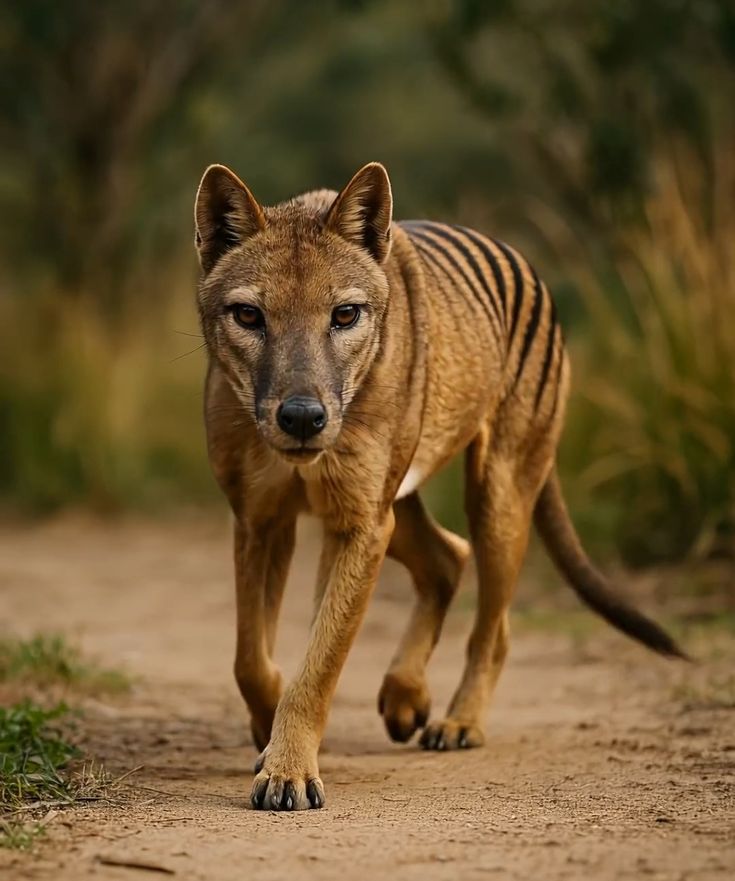
The Thylacine (Thylacinus cynocephalus), often colloquially known as the Tasmanian tiger due to the striped pattern of its back (though it was actually a marsupial dog), was a unique marsupial predator native to Australia and New Guinea. It was the largest land predator in Tasmania until its extinction. Its appearance was unusual, resembling a large dog with a tiger’s stripes. It was a carnivore, feeding primarily on small to medium-sized mammals.
1.2. The Extinction Context
The Thylacine became extinct in the wild, with the last known individual, a captive animal, dying in Hobart Zoo, Tasmania, on September 6, 1936. Its decline was largely driven by human activity, including bounty programs, habitat loss, and competition with introduced species like dogs and foxes. Its relatively recent extinction (until the 1930s/1940s) and the high quality of preserved tissue samples (including skin, blood, and tissue from the last individual and historical specimens) have made it a prime candidate for scientific exploration into de-extinction techniques.
1.3. The Goal: De-Extinction via Genetic Engineering
De-extinction aims to revive extinct species using modern biotechnology. The core goal, in the case of the thylacine, is to create living individuals that are phenotypically and genetically similar to the original species, ideally capable of surviving and potentially reproducing in suitable habitats. This document explores the scientific possibilities, challenges, and ethical dimensions of achieving this specific goal using the thylacine as a case study.
2. Scientific Basis: The Thylacine Genome
2.1. Genome Sequencing Success
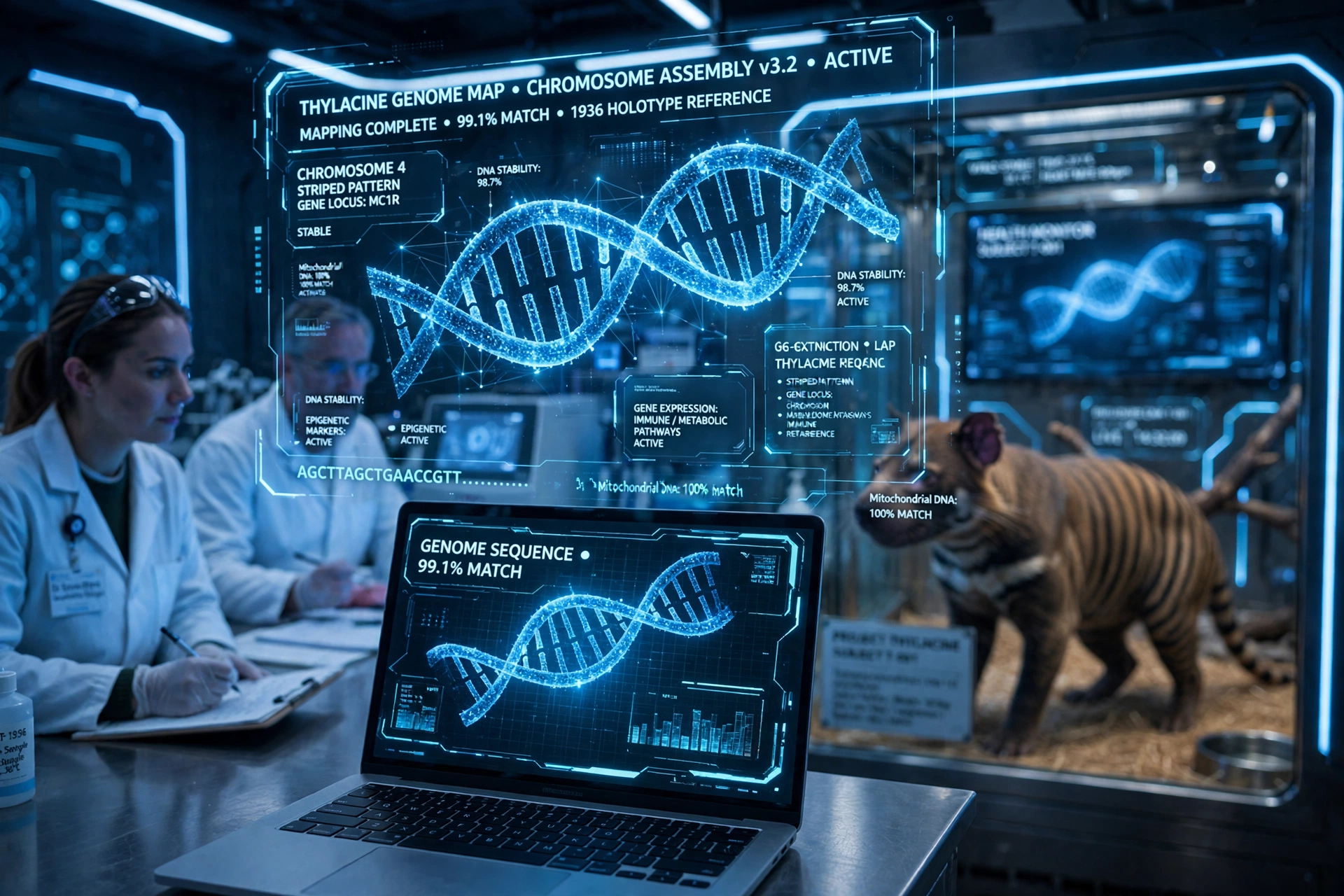
Significant progress has been made in sequencing the thylacine genome. Projects like the one led by Professor Mike Archer and Dr. Jennifer Hamilton at the University of New South Wales, and ongoing work by the Save the Tasmanian Devil Project, have generated high-quality draft genomes from preserved tissue samples. This provides a detailed blueprint of the thylacine’s DNA sequence.
2.2. Understanding the Genetic Blueprint
Having the genome sequence allows scientists to:
- Identify specific genes responsible for key traits (e.g., fur pattern, skeletal structure, metabolism).
- Understand the genetic basis for its biology and ecology.
- Compare its genome with living relatives (other marsupials like kangaroos or devils) to infer missing information.
- Identify any unique genetic elements or complexities due to its unique position as a marsupial.
2.3. Caveats and Uncertainties
- Genome Completeness: Early drafts might not be 100% complete or accurate. Some regions might be repetitive or damaged, making assembly difficult.
- Functional Genomics: Having the sequence doesn’t automatically mean understanding how every gene functions or interacts. Epigenetic modifications (changes to DNA that don’t alter the sequence but affect gene expression) also play a crucial role and might not be fully captured from static tissue samples.
- Phenotype Prediction: It’s impossible to perfectly predict the appearance and behaviour of an engineered animal solely from its DNA sequence.
3. Proposed De-Extinction Methods
Several scientific approaches are theoretically applicable to de-extinction. Applying these to the thylacine requires overcoming significant hurdles.
3.1. Method 1: Genome Editing (e.g., CRISPR/Cas9)
- Concept: Modify the genes of a closely related living species (the surrogate) to make them more similar to the extinct species’ genes. The goal is to recreate the extinct species’ characteristics within the surrogate’s genome.
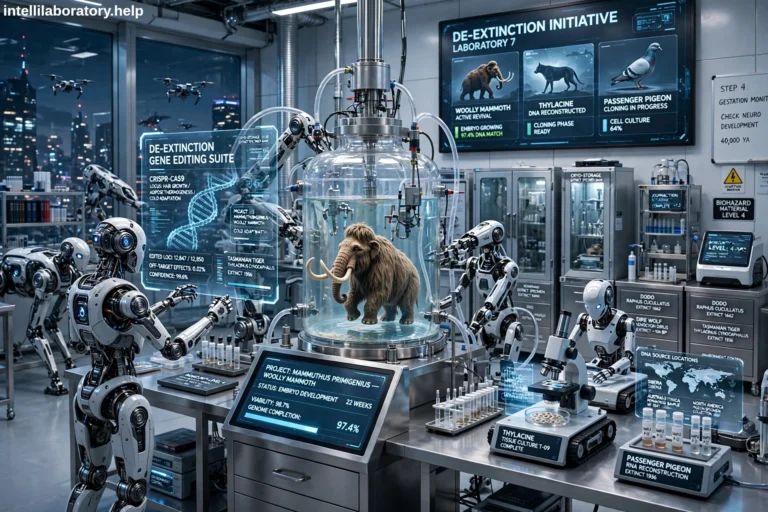
- Applying to Thylacine: The closest living relative is the numbat (Dasyurus spp.), another marsupial. CRISPR could potentially be used to edit numbat genes to resemble thylacine genes, aiming to alter fur, skull shape, or other features.
- Pros: Relies on existing, highly advanced technology (CRISPR). Could potentially be done on a single cell.
- Cons:
- Requires identifying which genes to edit and ensuring the edits accurately recreate the original function and appearance.
- Editing multiple genes simultaneously is complex and requires extensive verification.
- The surrogate (numbat) might have fundamental biological differences that prevent it from developing correctly or exhibiting the full range of thylacine traits.
- CRISPR on living cells: While technically possible (e.g., editing embryonic stem cells or somatic cells followed by reprogramming), creating a viable embryo from such a cell is still largely experimental for non-model organisms, especially marsupials.
3.2. Method 2: Somatic Cell Nuclear Transfer (SCNT)
- Concept: Transfer the nucleus (containing the DNA) from a cell of the extinct species into an enucleated egg cell (cytoplasm) from a closely related living species. The egg is then stimulated to develop into an embryo, which can be implanted into a surrogate mother.
- Applying to Thylacine: Requires obtaining viable somatic cells (e.g., skin or tissue) from the thylacine. The surrogate species would likely be another marsupial (e.g., a devil or kangaroo). The cytoplasmic environment (mitochondria) would come from the surrogate, not the thylacine.
- Pros: Directly uses the extinct animal’s nuclear DNA. Doesn’t require editing the surrogate’s genome.
- Cons:
- Requires high-quality, functional somatic cells from the extinct species. While tissue is available, extracting viable nuclei from cells preserved for decades (like the last individual’s tissues) is extremely challenging and likely unsuccessful for functional cloning.
- SCNT success rates are very low for most species, especially for non-model organisms like marsupials.
- The mitochondrial DNA (from the surrogate’s egg) would be different, potentially affecting energy metabolism and other functions.
- The resulting animal would still be a clone, but its mitochondrial DNA would not match the original thylacine, which is significant for genetic identity.
3.3. Method 3: Synthetic Genomics and Artificial Chromosomes
- Concept: Synthesize a complete copy of the extinct species’ genome de novo (from scratch) or assemble it onto artificial chromosomes. This synthesized DNA is then introduced into a surrogate egg cell, potentially along with the cytoplasm from the surrogate.
- Applying to Thylacine: This is the most ambitious method. Requires a complete, verified genome sequence, the ability to synthesize long stretches of DNA accurately, and the capability to package this DNA into chromosomes suitable for embryonic development.
- Pros: Creates a truly “new” genome identical to the original. Overcomes the limitations of using preserved cells or editing a living species.
- Cons:
- Extremely complex and expensive. Synthesizing genomes, especially for an entire organism with billions of base pairs, is currently beyond our technological and financial reach.
- Requires deep understanding of how to assemble and replicate the genome correctly within a cell.
- Highly experimental and has never been achieved for a complex multicellular organism like the thylacine.
4. Challenges and Limitations
4.1. Technical Hurdles
- Cell Viability: Obtaining functional somatic cells from the thylacine is the biggest barrier for SCNT.
- Genome Complexity: The thylacine is a marsupial, whose genome structure might differ significantly from the more-studied genomes of mammals like mice or humans, complicating SCNT and gene editing.
- Developmental Biology: Even if a genome is created or edited, ensuring it can direct the development of a healthy, viable embryo and a functional animal is a major challenge, particularly for complex traits and organ development.
- Epigenetics: The regulation of genes (turning them on/off) is crucial for development and adaptation. Capturing the correct epigenetic state from static tissue samples or programming it artificially is extremely difficult.
- Synthetic Biology Limits: Method 3 is currently science fiction, far beyond current capabilities.
4.2. Biological Complexity
- Beyond DNA: An organism’s traits are shaped by its genome and its environment during development (epigenetics), as well as interactions within its ecosystem later in life. DNA sequence alone doesn’t guarantee the right animal.
- Unknowns: Some aspects of the thylacine’s biology might be encoded in non-coding parts of the genome or depend on environmental factors present when the animal was alive that are now absent.
4.3. The “Dilution Problem”
Once created, the first generation would be clones. However, to establish a population, these clones would need to be bred with each other. This means the original genome would start to mix with itself, leading to rapid loss of genetic diversity and potential inbreeding depression (diseases, reduced fitness) unless the initial stock is incredibly large and diverse (which is impossible with limited starting material). This is a fundamental limitation for any cloning-based de-extinction.
4.4. Funding and Resources
De-extinction projects are incredibly expensive and resource-intensive, requiring specialized facilities, expertise, and long-term funding. Securing this is a significant barrier.
4.5. Timeline Uncertainty
It is highly speculative how long it would take to achieve any of these methods. Some steps (like improving SCNT for marsupials) might take decades, while others (synthetic genomics) might remain out of reach for much longer.
5. Ethical Considerations
5.1. Playing God and Ecological Integrity
- Critics argue that resurrecting extinct species diverts focus and resources from protecting currently endangered species and habitats. The primary lesson from thylacine extinction was human impact; de-extinction might not address that.
- Creating novel organisms, even copies, raises questions about naturalness and ecological disruption if released into the wild.
5.2. Animal Welfare
- The process of creating these animals, especially cloning (which often results in failed pregnancies or deformed offspring), raises serious animal welfare concerns.
- Would it be ethical to keep a cloned thylacine in captivity, or attempt to release it into the wild?
5.3. Ecological Consequences
- Reintroducing a species could have unforeseen consequences on existing ecosystems, potentially harming native species or altering habitats.
5.4. Scientific Hubris
- Some question whether the immense scientific and financial effort is justified, given the complexity and potential failure.
6. Conclusion
The thylacine is a compelling candidate for de-extinction research due to its recent extinction and the availability of preserved genetic material. However, the path from DNA sequence to a living, breathing thylacine animal faces immense scientific, technical, financial, and ethical challenges.
While methods like SCNT and genome editing are theoretically possible, their successful application to the thylacine is currently highly improbable due to the difficulty of obtaining viable cells, the complexity of marsupial biology, and the low success rates of these technologies for non-model organisms.
Synthetic genomics remains largely science fiction for organisms as complex as the thylacine.
Furthermore, even if a thylacine could be created, establishing a viable population and reintroducing it into the wild presents profound ecological and ethical questions.
Therefore, while the scientific exploration of de-extinction techniques for the thylacine is a fascinating area of research, the actual resurrection of the species using current or foreseeable technology appears extremely distant, if not impossible, at this time. The focus should remain on conserving biodiversity and preventing further extinctions in the present.
7. Future Outlook
Advances in gene editing, cloning technologies, stem cell research, and synthetic biology might eventually overcome some of these hurdles. However, the complexity of reviving a highly specialized mammal like the thylacine is immense. Research into the thylacine genome contributes valuable knowledge to biology, but the creation of a living thylacine is likely to remain a distant dream, or perhaps an unattainable goal, for the foreseeable future. The debate surrounding de-extinction will continue to evolve as technology progresses.
This analysis provides a comprehensive overview of the state of play in thylacine de-extinction research, highlighting both the potential and the significant obstacles involved.
Future Outlook: Navigating Challenges and Possibilities
The path towards potentially bringing the Thylacine back faces a complex landscape of scientific, financial, ethical, and ecological hurdles. While technological progress in genomics and cloning is rapid, translating it into a viable de-extinction program is fraught with difficulties.
Scientific and Technical Hurdles
- Genetic Integrity: The incomplete nature of the genetic reference, even with the genome fully sequenced, means there’s no perfect template. Decisions must be made about which genes to include or modify, and these choices could impact the animal’s health and authenticity.
- Mitochondrial Replacement: Creating viable hybrid embryos, particularly using mitochondrial DNA from closely related species (like the Tasmanian Devil), is technically demanding and requires further refinement. Success rates for interspecies mitochondrial replacement are not guaranteed.
- Genetic Drift and Health: Captive-bred populations, even if genetically engineered, will likely experience genetic drift and a higher incidence of disease, especially if relying on disease-prone relatives like the Devil. Maintaining genetic health and diversity over generations is a significant challenge.
- Developmental Viability: Ensuring that embryos develop properly in utero (or via surrogacy) and lead to healthy offspring capable of surviving and reproducing remains a major unknown. The surrogate mother’s health and the embryo’s compatibility are critical factors.
Financial and Logistical Constraints
- Huge Costs: De-extinction projects are extraordinarily expensive. Funding such long-term, high-risk research requires substantial and sustained investment from governments, private philanthropy, and potentially dedicated research institutions.
- Long Timeframes: Success, if achieved, is likely to take decades, requiring patient funding and commitment from stakeholders.
Ethical and Ecological Uncertainties
- Defining “Authenticity”: What does a Thylacine cloned from nuclear DNA with Devil mitochondria really mean? Is it the Thylacine? A hybrid? A novel engineered species? Defining the target phenotype and ensuring genetic fidelity is complex.
- Ecosystem Readiness: Even if genetically similar, will a reintroduced Thylacine thrive in the drastically changed Tasmanian and Australian landscapes? Its ecological niche might have shifted, and prey species might be different or extinct themselves.
- Ecological Consequences: Introducing a novel predator could have unforeseen impacts on existing native fauna and ecosystems. Rigorous, long-term ecological monitoring would be essential but difficult to implement.
- Resource Allocation Debate: Critics argue that resources spent on de-extinction could be better used for conserving currently endangered species facing immediate threats.
Despite these formidable challenges, the pursuit of Thylacine de-extinction remains a powerful driver for technological innovation in genomics and cloning, and sparks important debates about conservation priorities, our relationship with extinct species, and the very definition of life.
Future Outlook: Potential Benefits and Societal Implications
If the technical and ethical hurdles can be overcome, the successful de-extinction of the Thylacine could yield profound benefits, extending far beyond simply reviving one species.
Potential Benefits
- Scientific Advancement: Techniques developed for Thylacine de-extinction, particularly in genome editing and advanced cloning, could have applications in human medicine, livestock improvement, and conservation biology more broadly.
- Symbolic Value: The Thylacine, often called the “marsupial wolf” or “Tasmanian tiger,” is an iconic symbol of Australia’s unique biodiversity and its loss represents a deep wound. Reviving it could offer significant cultural, educational, and emotional value to Australians and the international community.
- Restoration Ecology: If successful, reintroducing a top-order predator could potentially help restore balance to ecosystems that have been altered by its absence, although this requires careful management and monitoring.
- Conservation Paradigm Shift: Success could fundamentally change conservation practice, demonstrating that extinction is not always irreversible and potentially encouraging more aggressive protection efforts for vulnerable species.
Societal and Ethical Considerations
- Public Engagement: The Thylacine project has already galvanized public interest in science and conservation. Continued engagement will be crucial to maintain support and navigate the ethical questions.
- Defining Boundaries: Success could force society to confront difficult questions about the limits of human technological power, the ethics of “playing God,” and the responsibilities that come with resurrecting extinct species.
- Global Inspiration: A successful Thylacine could inspire similar efforts globally, fostering international collaboration on de-extinction and ecological restoration.
The future of Thylac (Thylacine) de-extinction is uncertain but holds immense potential. It is a quest that pushes the boundaries of science while forcing deep reflection on humanity’s role in nature’s past, present, and future. Whether it ultimately succeeds depends not only on scientific ingenuity but also on careful ethical deliberation, adequate funding, and societal will. The journey itself, however, promises significant advancements and critical conversations
about our relationship with the natural world.
About the Author