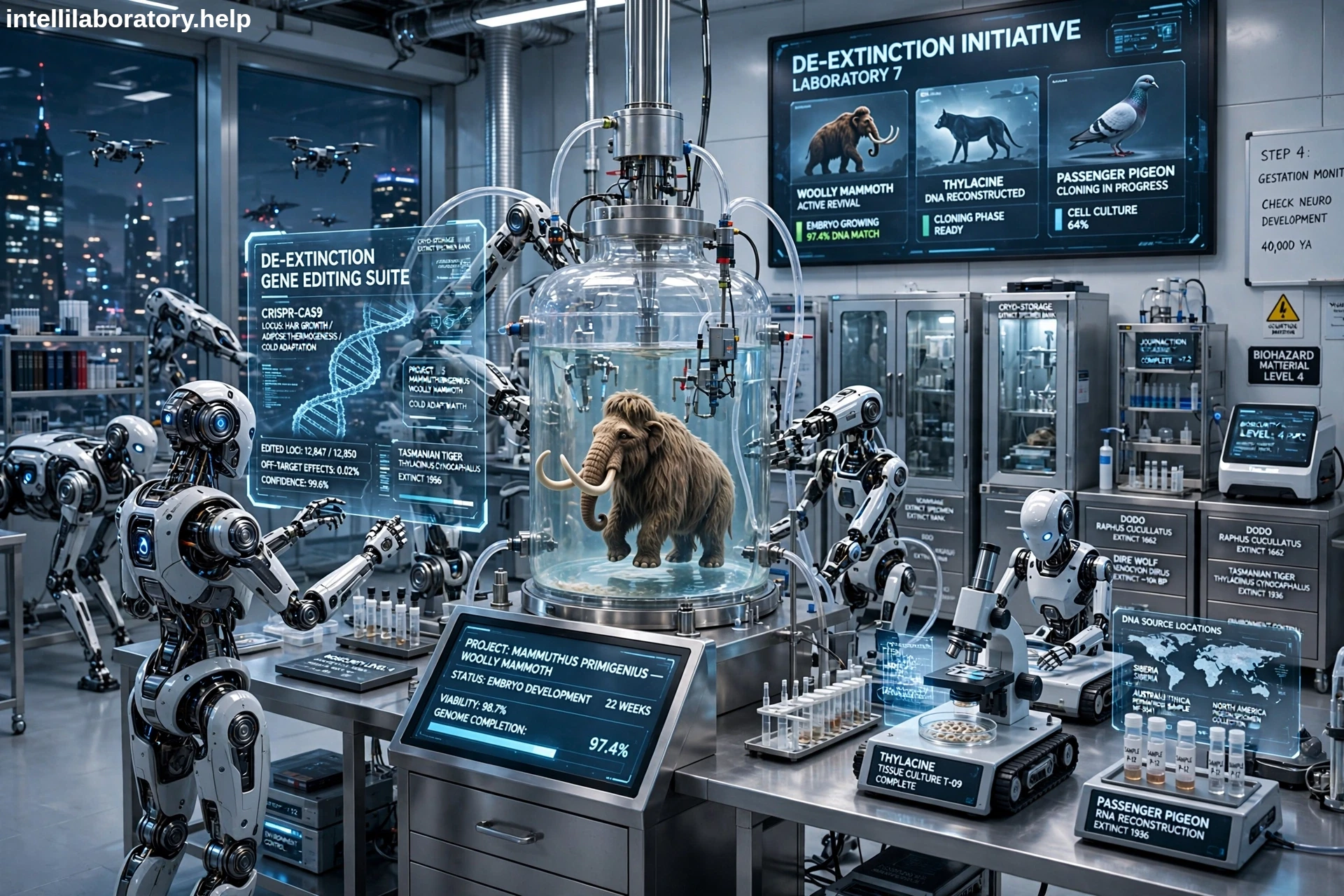
AI Laboratories, De-Extinction, and the Future of Prehistoric Life
The Intersection of Artificial Intelligence and Biotechnology is Revolutionizing Our World. At IntelliLaboratory, we are at the forefront of harnessing AI’s power to solve complex problems across various scientific domains, including the burgeoning field of De-Extinction. This isn’t science fiction anymore; it’s a rapidly evolving reality with profound implications for ecology, conservation, and even medicine.
The Success of De-Extinction: More Than Just Genetic Code
De-extinction – the resurrection of extinct species – faces monumental scientific hurdles, primarily in cloning and genetic engineering. While early concepts involved somatic cell nuclear transfer (like the Dolly the Sheep example, albeit inefficiently), the current and most promising approach relies on Genome Editing, particularly tools like CRISPR-Cas9.
- Why Genome Editing? It allows scientists to precisely modify the DNA of a Living Relative of the extinct species. By introducing specific genetic changes into the relative’s genome, scientists aim to “correct” the DNA to more closely resemble that of the extinct ancestor.
- AI’s Crucial Role: This is where AI Laboratories like IntelliLaboratory come into play. AI significantly accelerates and enhances this process:
- Genome Analysis: AI algorithms can rapidly analyze vast amounts of genomic data from the extinct species (derived from fossils, frozen tissues, etc.) and its living relatives, identifying the precise differences needed.
- Target Prediction: AI can predict the most effective target sites for genome editing to achieve the desired phenotypic traits.
- Simulation & Optimization: AI models can simulate the potential outcomes of genetic modifications, predict unintended consequences (off-target effects), and optimize the editing process for efficiency and safety.
- Data Integration: Integrating data from paleontology, evolutionary biology, ecology, and genetics requires sophisticated pattern recognition, which AI excels at.
Which Prehistoric Species Will Work Best?
Not all extinct species are viable candidates for de-extinction. The feasibility depends heavily on DNA Integrity, Evolutionary Distance to a living relative, and Ecological Viability.
- Top Contenders (Most Feasible):
- Woolly Mammoth (Mammuthus primigenius): Perhaps the most famous candidate. DNA is relatively well-preserved in permafrost, especially in Siberia and the Yukon. Its close living relative is the Asian Elephant (Elephas maximus), whose genome provides a solid foundation. Several projects (like Colossal
Biosciences’ HarvEST and the Rosalind Franklin Lab at Harvard) are actively working towards this goal, aiming to create elephant-mammoth hybrids potentially suited for restoring the mammoth steppe ecosystem. - Passenger Pigeon (Ectopistes migratorius): Once common, driven to extinction by hunting and habitat loss, the last known bird died in 1914. Its close living relative is the Band-tailed Pigeon. This project is highly motivated by conservation, aiming to restore the ecological roles these birds played.
- Gastric Brooding Frog (Rheobatrachus silvaticus): An amphibian known only from a few Queensland, Australia, collections. Its close living relative is the Platypus (Ornithorhynchus anatinus), a monotreme with significant genetic differences. While a huge scientific challenge, the project aims to understand developmental biology and potentially aid amphibian conservation efforts facing global threats.
- Woolly Mammoth (Mammuthus primigenius): Perhaps the most famous candidate. DNA is relatively well-preserved in permafrost, especially in Siberia and the Yukon. Its close living relative is the Asian Elephant (Elephas maximus), whose genome provides a solid foundation. Several projects (like Colossal
- Less Feasible Candidates:
- Dodo (Raphus cucullatus): DNA degrades significantly over time, especially on islands without permafrost. The living relative is the Saddlebill and Nicobar pigeon, which are not very closely related. Recovery of usable genomic data is a major hurdle.
- Dire Wolf (Canis dirus): While DNA might be available, its closest living relative is the Gray Wolf (Canis lupus). While technically possible, the ecological niche and the immense resources required make it a lower priority compared to projects with clearer ecological or conservation benefits.
- Cave Bear (Ursus spelaeus): Similar to the dire wolf, its closest relative is the Brown Bear (Ursus arctos). Data might be available, but ecological restoration is complex.
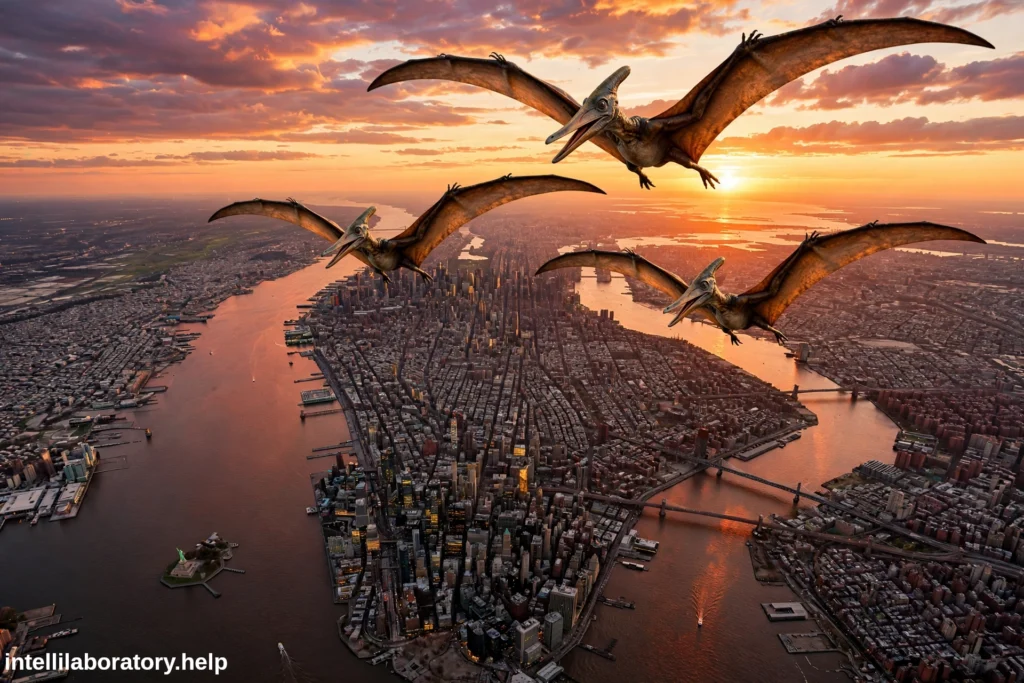
What Prehistoric Life is Most Accepted for De-Extinction?
The acceptance of de-extinction is complex and often debated. Generally, projects focusing on Ecological Restoration or Symbolic Value tend to receive more acceptance than purely academic ones, even if technically challenging species might seem easier.
- Ecological Restoration: Reviving species like the Woolly Mammoth or the Passenger Pigeon is often viewed more positively because they are seen as potential tools to restore degraded ecosystems. Mammoths could theoretically recreate steppe grasslands, while passenger pigeons could help manage forests.
- Conservation Success Story (Symbolic & Educational): Bringing back a highly charismatic and recently extinct species, like perhaps the Giant Ground Sloth (if a closer relative existed and was easier to work with) or even the Steller’s Sea Cow (Hydrodamalus gigas – though DNA is very poor), could serve as a massive success story, demonstrating the power of combining advanced biotechnology with conservation efforts.
- Medical Benefits (Less Common): While fascinating, resurrecting species purely for research or historical reasons often faces more skepticism due to the immense costs and ethical questions without direct tangible benefit. The gastric brooding frog example is a hopeful exception, potentially offering insights into development and immunity.
Our Perspective: AI Laboratories and the Future of De-Extinction
At IntelliLaboratory, we see de-extinction as a frontier driven by powerful AI and advanced biotech capabilities. Here’s our perspective:
- AI is the Catalyst: The bottleneck in de-extinction lies in the complexity and cost of genome editing. AI, particularly through machine learning and deep learning, is critical for making this process faster, cheaper, and more accurate. Our AI platforms are designed to tackle the massive data challenges inherent in this field, from analyzing fragmented ancient DNA sequences to optimizing CRISPR delivery.
- A Nuanced Ethical Landscape: De-extinction isn’t without controversy. Questions about resource allocation (could those funds better go towards conserving existing species?), potential ecological disruption, and the definition of life itself arise. Our focus is on developing the tools, not necessarily endorsing the outcomes. We believe transparency, rigorous scientific assessment, and broad societal discussion are crucial.
- Beyond Resurrection: The technology developed for de-extinction – AI-driven genome editing, advanced stem cell research, sophisticated biomaterials for tissue engineering – has profound implications far beyond bringing species back. It paves the way for treating genetic diseases, enhancing food security, and developing novel materials.
- A Long Road with a Shorter Timeline: While Jurassic Park fantasies are far from reality, we believe the next decade or two could see the successful resurrection and potential reintroduction of species like the Woolly Mammoth or the Passenger Pigeon, thanks to rapid advances driven by AI and biotech convergence.
Conclusion
De-extinction represents a fascinating and challenging frontier at the intersection of AI, genomics, and synthetic biology. While fraught with ethical considerations, the potential to restore lost species and ecosystems is immense. AI Laboratories like IntelliLaboratory are uniquely positioned to contribute the computational power and analytical sophistication needed to turn the dream of bringing back the past into a tangible scientific possibility. The journey is long, but the destination – a deeper understanding of life and the power to potentially reverse some of our greatest losses – is profoundly exciting.
This post was created by IntelliLaboratory to showcase the exciting potential of AI in cutting-edge scientific fields.
About the Author