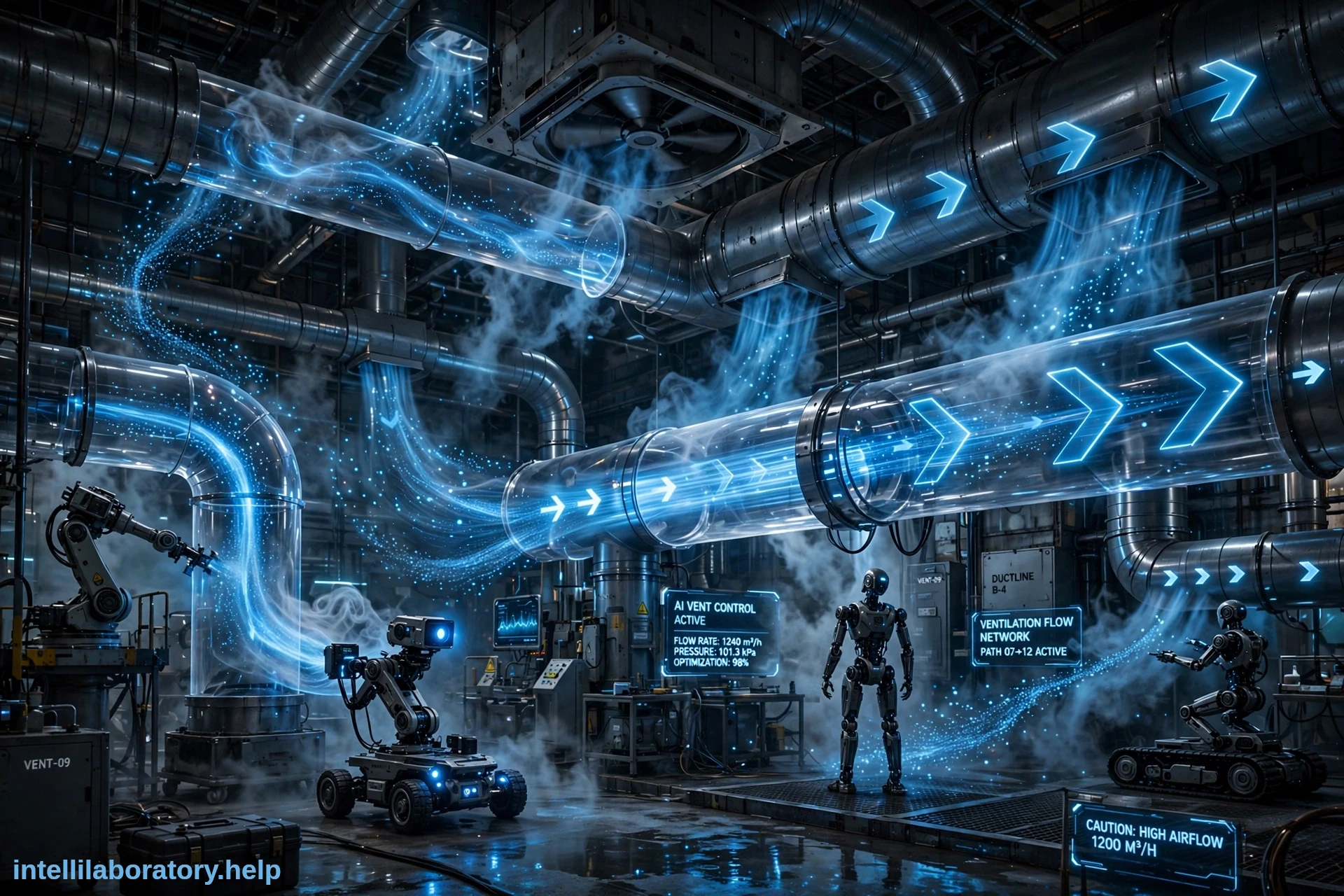
(AI) Laboratories
- Purpose: This document provides a comprehensive overview of the ventilation requirements specific to modern Artificial Intelligence (AI) laboratories. These labs often house high-density computing infrastructure (servers, GPUs) that generate substantial heat, along with potential unique hazards related to cooling systems and data handling.
- Scope: It covers the fundamental principles, design considerations, specific requirements, and operational aspects of ventilation, air conditioning, and related systems tailored for AI lab environments. It addresses thermal control, air quality, contaminant management, and safety integration.
- Importance: Effective ventilation is not merely about air exchange in AI labs; it’s a critical component for maintaining optimal operating conditions for sensitive equipment, ensuring personnel safety, preventing damage to infrastructure, and complying with regulatory standards.
Understanding the Unique Challenges of AI Labs
- High Heat Loads: AI labs, particularly those focused on machine learning and deep learning, utilize vast numbers of compute nodes. GPUs and high-performance processors generate immense amounts of waste heat (typically 0.6-0.8 kW per server rack, sometimes much higher). This creates extreme thermal loads, orders of magnitude greater than standard office or traditional research labs.
- Sensitivity of Equipment: Servers, GPUs, and associated hardware are highly sensitive to temperature and humidity variations. Overheating leads to throttling (reduced performance) and potential permanent damage. Excessive dryness can cause static electricity issues. High humidity can lead to condensation and corrosion.
- Potential Hazards: Beyond heat, labs may use specialized cooling systems (e.g., chilled water, liquid cooling, high-density air coolers using refrigerants) which introduce potential chemical hazards or require specific ventilation. Some AI research may involve biological materials or chemicals that need containment and exhaust. Even standard electrical components can pose risks (e.g., ozone from some power supplies).
- Air Quality for Personnel: While less toxic than traditional lab chemicals, the hot, dry, and potentially ozone-rich environment can pose comfort and safety issues for personnel (dusty air, static electricity, thermal stress).
- Noise Control: Ventilation systems, especially high-capacity fans and ductwork, can contribute significantly to lab noise levels, which can be disruptive and potentially harmful if not properly managed.
Core Ventilation Components and Principles
- Air Handling Units (AHUs): These are central components, responsible for moving large volumes of air, filtering it, heating/cooling/humidifying/dehumidifying it to meet the required specifications, and mixing in fresh air (outside air).
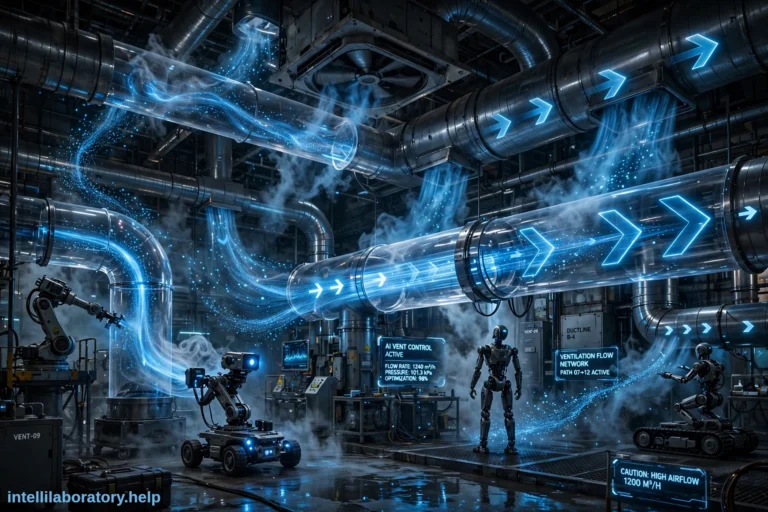
- Ductwork: The network of pipes (usually made of galvanized steel, aluminum, or flexible materials) that transports conditioned air (supply) and exhaust air (return/exhaust) between the AHU and the lab spaces. Design must handle high pressures and airflow rates, minimize noise, and prevent leakage.
- Terminal Units: Devices installed in lab rooms to deliver conditioned air directly (e.g., high-velocity diffusers, ceiling inlets, underfloor air distribution (UDC/AC) systems). UDC systems are often preferred in AI labs for more precise control and containment.
- Filtration: Essential for removing particulate matter (dust, fibers, microbes) from supply air. Minimum requirements are MERV-13 or higher, but labs may use higher efficiency filters (MERV-16, F7+) depending on specific risks (dust, static control, biological research). High-static pressure filters require careful fan selection.
- HVAC Controls: Sophisticated building management systems (BMS) are crucial. They monitor and control temperature, humidity, pressure, air quality, and filter status. They should integrate with server room temperature sensors and potentially control power usage effectiveness (PUE) by adjusting cooling based on actual heat load.
- Exhaust Systems: Dedicated pathways to remove contaminated air (contaminated air, fumes, excess coolants, biological agents, etc.). Must be designed to handle required exhaust volumes without creating pressure differentials that interfere with supply systems or spread contaminants.
Detailed Requirements for AI Laboratory Ventilation
- Thermal Management (The Primary Driver):
- High Airflow: Requires massive volumes of air movement (often thousands of cubic feet per minute (CFM) per 1000 square feet). Calculation based on server density (BTU/hr output) and desired temperature gradient (e.g., delta T of 20-30°F).
- Precise Temperature & Humidity Control: Target temperatures typically range from 68-75°F (20-24°C) with very tight setpoints. Humidity control (often 40-60% RH) is critical to prevent static discharge and ensure reliable electronics.
- Underfloor Air Distribution (UDC/AC): Highly recommended. Places cool air close to the heat sources (server racks) and exhausts hot air upward, improving efficiency and allowing for raised floors for cable and potentially exhaust duct runs. Requires careful design for pressure balance and flow distribution.
- Chiller Plants & Cooling Towers: Often necessary to provide the chilled water needed for air conditioning systems or direct evaporative cooling. Exhaust from cooling towers (humidity) must be managed, often requiring recirculation or discharge outside.
- Air Filtration:
- MERV-13 Minimum: Filters must capture dust and particulates that could clog equipment or enter the system.
- Static Control: Filtration can help reduce static generation, but specialized anti-static filters might be needed.
- Biological/Chemical Containment (If Applicable): Requires higher efficiency filters (HEPA or ULPA) and potentially specialized containment designs if hazardous biological agents or chemical coolants are present. This is less common for standard AI labs but critical for certain research areas.
- Exhaust & Containment:
- Dedicated Server Exhaust: High-capacity exhaust systems are necessary to remove hot air generated by dense server racks, maintaining a stable cool air supply. This air is typically recirculated (after filtration and conditioning) or partially exhausted depending on temperature.
- Hazardous Material Exhaust (If Present): Specific, powerful exhaust systems designed to capture and safely remove fumes from coolants, solvents used in cleaning, or biological agents. Must comply with local regulations (e.g., NFPA, OSHA).
- Negative Pressure: Lab rooms (especially server rooms) may need to maintain slightly negative pressure relative to corridors or adjacent spaces to prevent contaminated air from escaping. Careful balancing is required.
- Air Quality & Personnel Comfort:
- Supply Air Quality: Filtration is key. Adequate air changes (often 10-20+ air changes per hour (ACH)) are needed to maintain acceptable air quality and dilute any potential contaminants.
- CO2 Monitoring: Recommended to ensure adequate fresh air supply (indirectly related to thermal comfort and occupant well-being). High concentrations can cause drowsiness or headaches.
- Ventilation Rates: Significantly higher than standard office spaces due to heat load and personnel density (though personnel density in server rooms might be lower). Often driven by thermal comfort and air dilution needs.
- Noise Control:
- Source: Fans (especially large ones in AHUs/UDC plenums), ductwork turbulence, and equipment (cooling systems).
- Mitigation: Use sound attenuators in ducts, select low-noise fans, optimize duct design to minimize turbulence, consider acoustic ceiling tiles, use vibration isolation mounts for equipment. Noise levels must comply with OSHA standards and workplace policies.
- Power Usage Effectiveness (PUE):
- While not directly a ventilation specification, the design is heavily influenced by PUE. Efficient thermal management aims to minimize the energy used by the cooling system relative to the IT equipment load. Poorly designed ventilation (e.g., oversized ducts, inefficient fans) increases PUE.
Integration and System Design Considerations
- HVAC System Integration: The ventilation system must be tightly integrated with the building management system (BMS) and the server infrastructure monitoring systems. This allows for dynamic adjustment of airflow, temperature, and humidity based on real-time needs, improving efficiency and preventing hotspots.
- Redundancy: High availability is critical for AI operations. Designs often include redundant components (fans, coils, AHUs, power supplies) to minimize downtime.
- Pressure Management: Careful balancing of supply and exhaust airflows is crucial to maintain the correct pressure relationships between different zones (e.g., server room vs. office areas, lab vs. corridor).
- Material Selection: Ductwork and components should be selected for low-static generation, resistance to corrosion (especially near coolants), and suitability for high airflow pressures.
Maintenance and Monitoring
- Regular Filter Changes: Essential for maintaining airflow efficiency, indoor air quality, and system health. Schedule depends on air quality and usage.
- Coil Cleaning/Sanitization: Evaporative condensers and coils can harbor microbial growth and become less efficient if not cleaned.
- Fan Balancing & Inspection: Ensures even air distribution and optimal performance.
- System Performance Monitoring: Track airflow, temperature, humidity, filter status, and energy consumption via BMS. Trend analysis helps predict maintenance needs and optimize performance.
- Compliance Audits: Regular checks to ensure ongoing adherence to safety and efficiency standards.
Ventilation in AI laboratories is a complex, high-stakes discipline driven primarily by the immense heat loads from dense computing infrastructure. Effective systems require:
- High-capacity air movement (often UDC).
- Precise control of temperature and humidity.
- Robust filtration.
- Dedicated exhaust pathways for thermal management and potential hazards.
- Sophisticated controls and integration.
- Noise mitigation.
- Regular maintenance and monitoring.
Failure to properly design and operate these systems can lead to equipment overheating and failure, poor performance, increased energy costs, potential hazards to personnel, and significant operational downtime. A tailored, integrated approach is essential for the success and safety of modern AI laboratories.
About the Author