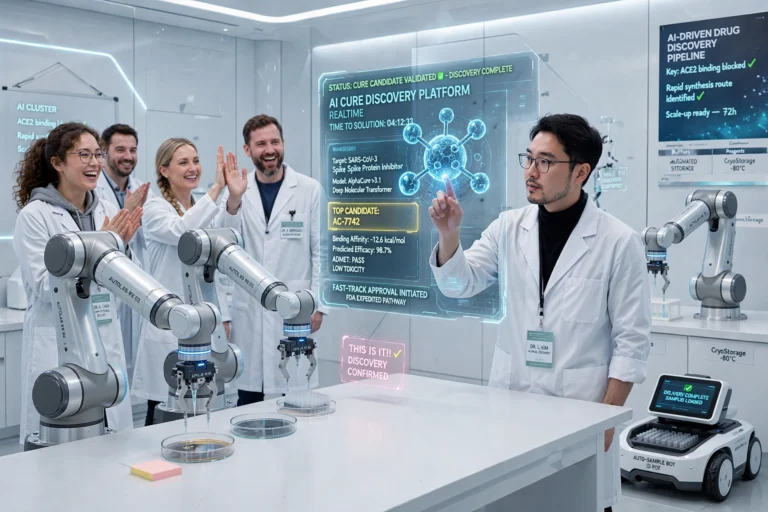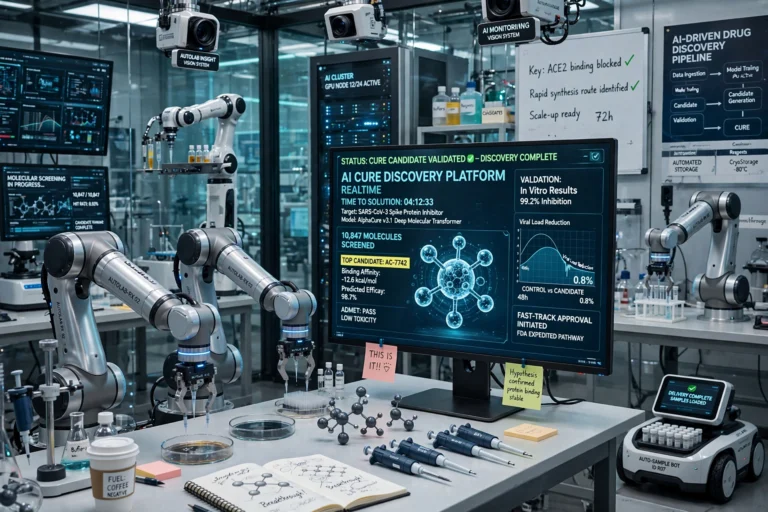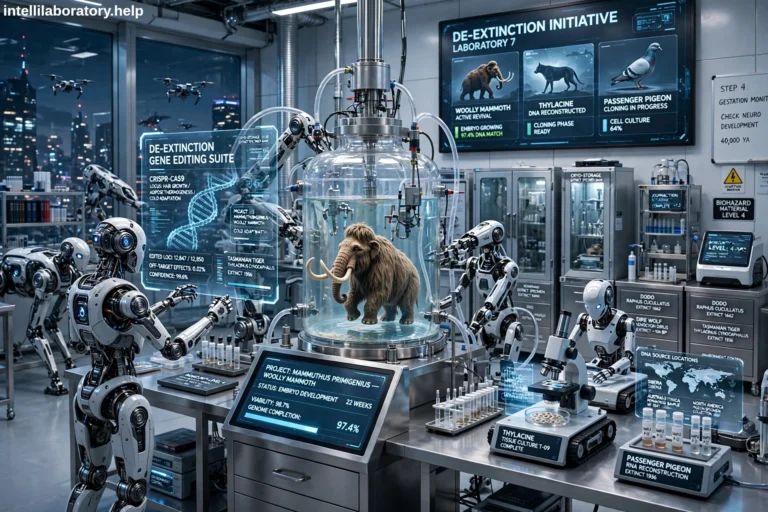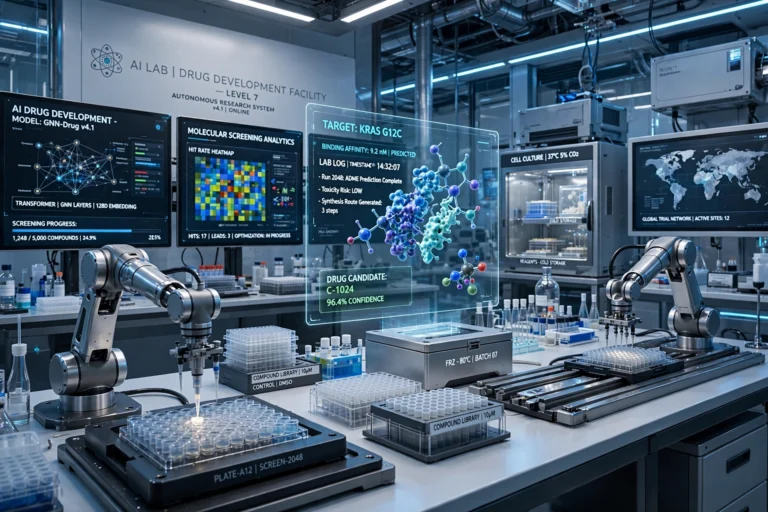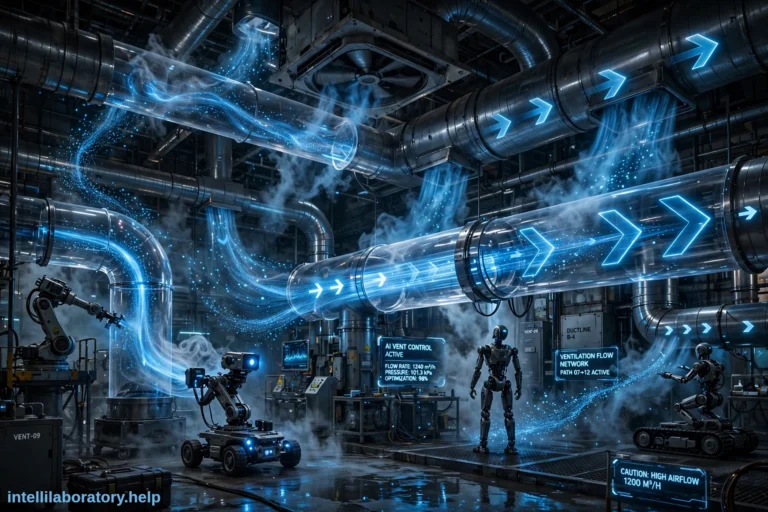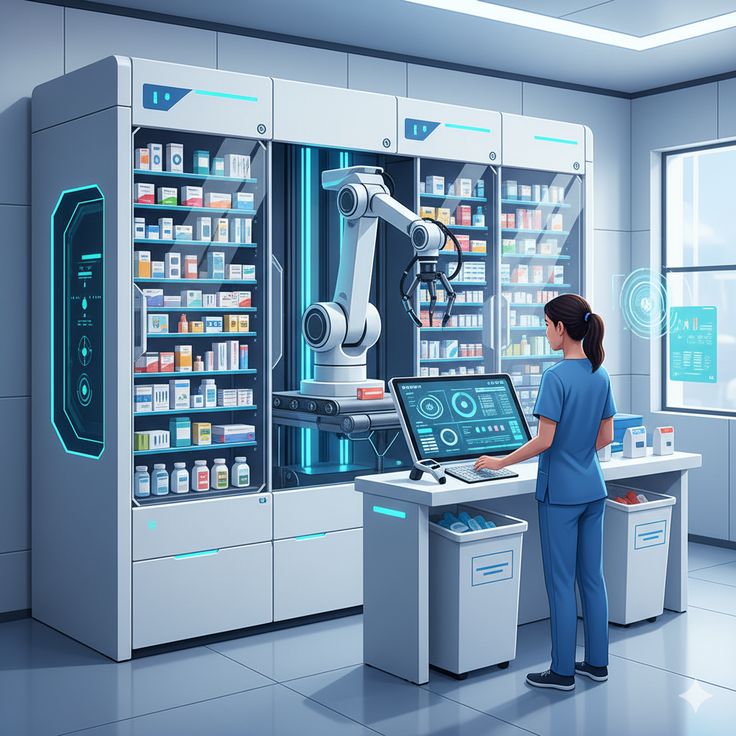
Beyond Automation to Intelligent Discovery.
- Category: AI in Laboratories / Future Trends
- Focus: Moving from simple automation to truly intelligent systems that understand context, learn, and make autonomous decisions.
- Content Outline:
- Introduction: Briefly state the shift from traditional labs to intelligent labs.
- Beyond Automation: Explain that simple robot arms and pipetting are the past; intelligent labs leverage AI for thinking.
- Key Capabilities of AI Labs:
- Predictive Analytics: AI predicting experimental outcomes based on vast datasets.
- Automated Hypothesis Generation: AI suggesting novel research directions.
- Intelligent Experimentation Design: AI optimizing lab experiments based on previous results and desired outcomes.
- Autonomous Lab Systems: AI managing workflows, monitoring experiments, and making adjustments in real-time (e.g., automated cell culture
monitoring). - Enhanced Data Analysis: AI handling complex datasets (omics data, imaging) to find patterns humans might miss.
- Explainable AI (XAI): The importance of understanding why AI makes certain recommendations.
- Benefits: Faster drug discovery, more efficient research cycles, reduction of human error, handling complex data overload.
- Challenges: Data quality, integration, explainability, security, ethical considerations (like AI replacing researchers).
- Conclusion: This is not just about doing tasks faster, but fundamentally changing how science is done.
About the Author