Exploring AI Tools for the Modern Laboratory
Title: The Intelligent Lab: Exploring the Power of AI Tools
Introduction:
Welcome to the future of laboratory work! The fusion of artificial intelligence (AI) and laboratory science is not science fiction anymore; it’s rapidly becoming a reality. intellilaboratory.help is dedicated to exploring, showcasing, and discussing the incredible potential of AI tools designed specifically for the lab environment. From accelerating drug discovery to optimizing complex processes, AI is poised to revolutionize how we conduct experiments and analyze data.
This document delves into the exciting possibilities of AI in laboratories, categorizing potential tools based on their functions, and highlighting how they can solve real-world problems. Whether you’re a researcher, a lab manager, or simply curious about the intersection of AI and science, these explorations aim to provide valuable insights and spark your imagination.
Categorizing AI Lab Tools
AI tools in the lab can be vast and varied, but we can broadly categorize them based on their primary function. Here are some key categories we might explore on intellilaboratory.help:
1. AI-Powered Data Analysis & Interpretation
- The Challenge: Labs generate massive amounts of data (images, sequencing reads, sensor readings, experimental results). Manually processing and interpreting this data is time-consuming, prone to human error, and often requires specialized expertise.
- AI Solution: Tools that can automatically analyze, classify, detect anomalies, and extract meaningful insights from complex datasets.
- Potential Tools (Conceptual):
- Automated Microscopy Image Analysis: Identifying cell types, counting colonies, detecting morphological changes, segmenting nuclei – all automatically.
- Sequencing Data Analysis: Accelerating bioinformatics tasks like variant calling, gene expression analysis, and pathway enrichment interpretation.
- Spectroscopy Data Interpretation: Automatically identifying peaks, suggesting potential compounds, comparing spectra against large databases.
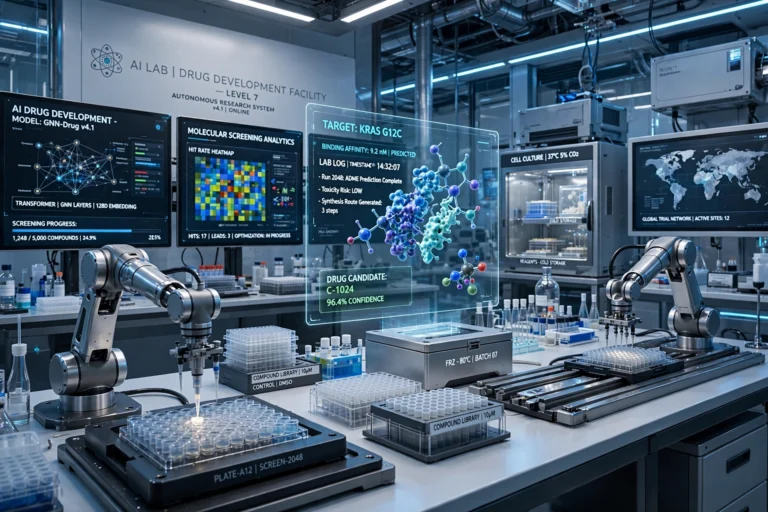
- High-Throughput Screening (HTS) Data Analysis: Filtering hits, identifying false positives/negatives, clustering similar compounds, predicting activity based on structure.
- Predictive Analytics for Experiments: Analyzing past experiments to predict the likely outcome (success/failure) of new experimental conditions.
2. AI for Experimental Design & Optimization
- The Challenge: Designing efficient experiments (like DoE – Design of Experiments) and optimizing parameters can be complex and require significant trial-and-error.
- AI Solution: Tools that can intelligently suggest optimal experimental parameters, predict outcomes based on models, and recommend efficient paths to discovery.
- Potential Tools (Conceptual):
- Optimization Engine for Analytical Methods: Suggesting instrument settings (temperature, flow rate, gradient) to achieve optimal separation or sensitivity.
- Predictive Design of Experiments (DoE): Using machine learning models to predict which combinations of factors (pH, temperature, pressure) will yield the best results, minimizing the need for exhaustive trial-and-error.
- Robustness Prediction: Simulating experimental conditions to predict how robust a reaction or process is likely to be under various environmental factors.
- Automated Protocol Generation: Creating optimized standard operating procedures (SOPs) based on desired outcomes and constraints.
3. AI for Laboratory Automation & Workflow Management
- The Challenge: Labs often struggle with inefficient workflows, scheduling bottlenecks, tracking inventory, and ensuring compliance.
- AI Solution: Tools that can monitor, analyze, and optimize lab workflows, automate routine tasks, and provide intelligent scheduling and tracking.
- Potential Tools (Conceptual):
- Intelligent Lab Inventory & Stockroom Management: Predicting when reagents will run out based on usage patterns and experiment schedules, automatically placing orders.
- Workflow Optimization & Scheduling: Analyzing lab usage data to optimize the scheduling of instruments and personnel, minimizing idle time.
- Automated Data Logging & Reporting: Continuously monitoring instrument status and data output, automatically logging results and generating reports.
- Compliance Monitoring: Using AI to audit lab procedures and data handling against predefined protocols and regulations (GMP, GLP, etc.).
4. AI for Scientific Discovery & Knowledge Synthesis
- The Challenge: Staying current with vast amounts of scientific literature and identifying patterns across diverse datasets can be overwhelming.
- AI Solution: Tools that can rapidly synthesize information from text, databases, and experimental results to identify trends, connections, and potential hypotheses.
- Potential Tools (Conceptual):
- Literature Mining & Hypothesis Generation: Analyzing scientific papers and databases to find connections between seemingly unrelated fields or suggest novel hypotheses.
- Patent Analysis & Competitive Intelligence: Identifying trends in research and development, potential collaborators, or areas of opportunity by analyzing patent data.
- Automated Review Summarization: Providing concise summaries of large bodies of scientific literature on a specific topic.
- Cross-Disciplinary Knowledge Mapping: Visualizing connections between concepts and research areas across different scientific domains.
5. AI for Quality Control & Assurance
- The Challenge: Ensuring consistent quality and reliability in lab processes and outputs requires rigorous monitoring and testing.
- AI Solution: Tools that can perform sophisticated pattern recognition and anomaly detection to identify deviations from quality standards faster and more accurately.
- Potential Tools (Conceptual):
- Automated Defect Detection: Identifying subtle defects or inconsistencies in products or materials using image analysis or sensor data.
- Predictive Maintenance for Instruments: Monitoring instrument performance data to predict potential failures before they occur.
- Smart Calibration Verification: Automatically verifying instrument calibration against internal standards or reference datasets.
- Batch Quality Prediction: Analyzing parameters from previous batches to predict the quality of an upcoming batch.
Why These Tools Matter & How They Can Help
The integration of AI into laboratories offers transformative potential:
- Accelerated Discovery: Reduce the time from hypothesis to validation.
- Increased Efficiency: Automate tedious tasks, optimize resource use, and streamline workflows.
- Improved Accuracy: Minimize human error in analysis and data recording.
- Deeper Insights: Uncover hidden patterns and correlations in complex data.
- Enhanced Decision Making: Provide data-driven recommendations for experiments and processes.
- Focus on Higher-Level Tasks: Allow researchers to focus on creative thinking and strategic planning rather than routine analysis.
The Journey of an AI Lab Tool
We believe that exploring these tools isn’t just about showcasing finished products, but understanding the journey:
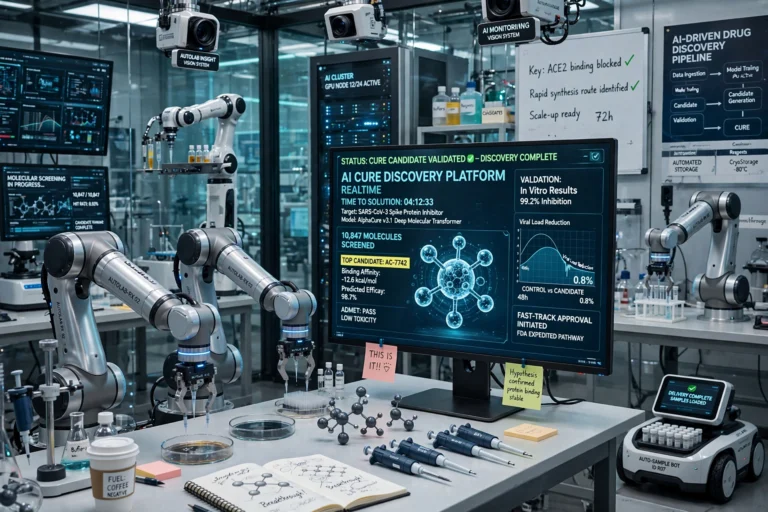
- Idea Generation: Identifying a specific lab challenge.
- Data Collection: Gathering relevant, high-quality data (often the bottleneck!).
- Model Development: Training AI models (machine learning, deep learning, etc.) on the data.
- Validation & Testing: Ensuring the tool is accurate, reliable, and unbiased.
- Deployment: Integrating the tool into the lab environment (software, API, hardware interface).
- Monitoring & Iteration: Continuously refining the tool based on user feedback and new data.
The potential for AI in the laboratory is immense. intellilaboratory.help aims to be a resource where you can discover these possibilities, understand the underlying concepts, and learn about the tools being developed. We encourage exploration and critical thinking – AI is a powerful tool, but its responsible and ethical application is paramount.
Whether you’re looking to implement AI in your lab, understand its potential, or simply stay informed about this exciting field, we hope this exploration provides valuable insights. The intelligent lab isn’t just a dream; it’s being built one tool, one dataset, one discovery at a time.