The AI Revolution in Drug Discovery: A Detailed Look at Laboratory Applications

Accelerating the Quest for Cures
The traditional process of discovering and developing a new drug is a monumental, time-consuming, and incredibly expensive endeavor. It often takes over a decade and billions of dollars to bring a single therapeutic candidate from the initial discovery phase to market. The high attrition rates at various stages of development mean that many potentially life-saving treatments never reach patients.
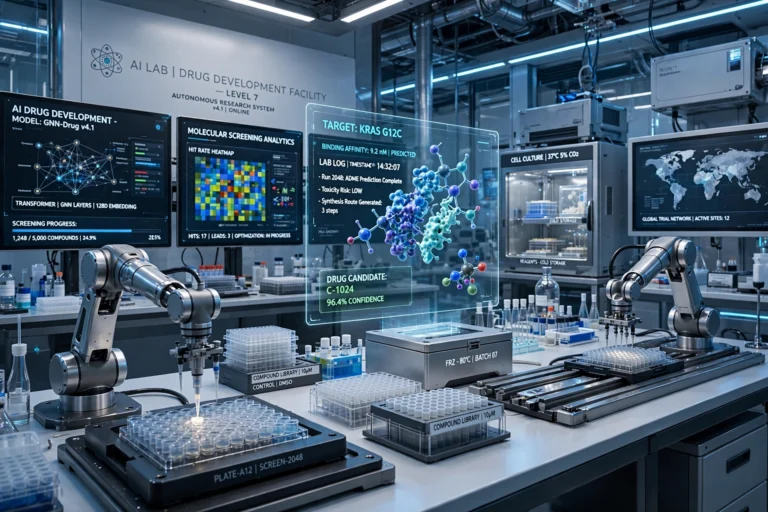
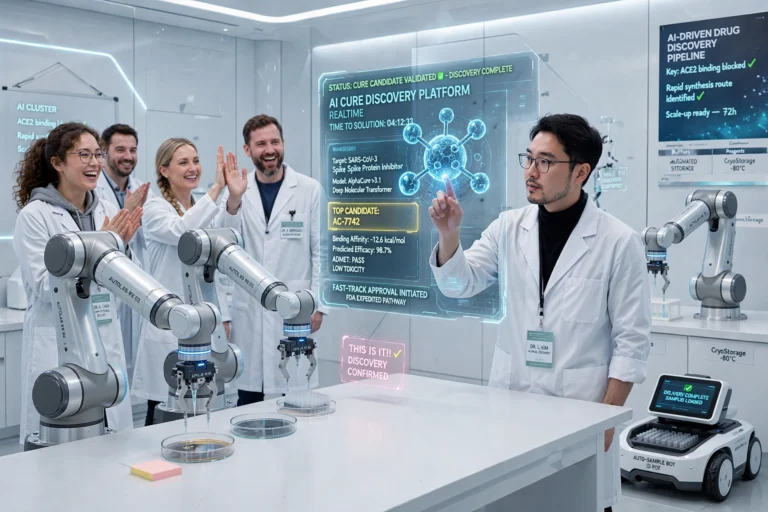
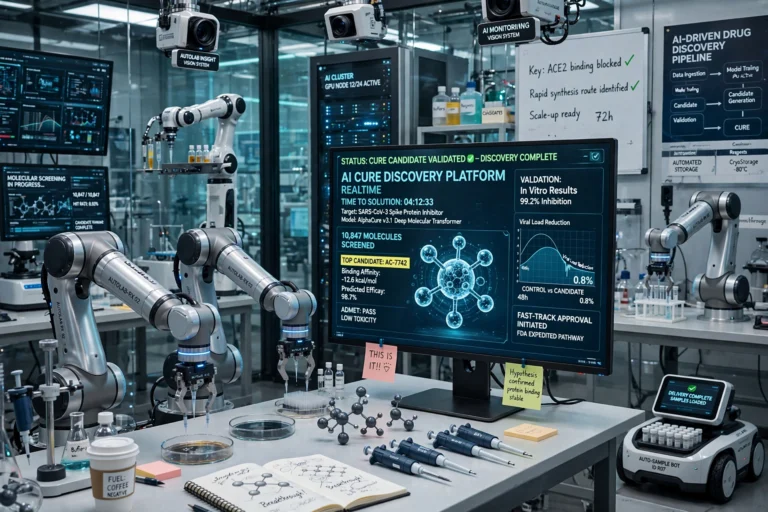
This is where Artificial Intelligence (AI) and Machine Learning (ML) enter the picture, transforming the landscape of laboratory research, particularly in Drug Discovery. By leveraging the power of AI, we can analyze vast datasets, identify complex patterns, predict molecular properties, and optimize experimental design in ways previously impossible for human researchers alone.
intellilaboratory.help is dedicated to exploring the potential of AI within laboratory settings. This document delves into the exciting field of AI Drug Discovery, detailing the various tools, categories, and potential applications we envision, ranging from simpler predictive models to complex systems-level analysis. We aim to provide insightful content that not only informs but also inspires the scientific community and businesses looking to harness the power of AI for faster, more efficient, and ultimately, more effective healthcare solutions.
Part 1: Foundational Pillars of AI Drug Discovery
AI Drug Discovery isn’t a single tool, but a synergy of different AI/ML techniques applied to specific challenges. Here are some foundational categories:
Category 1: Target Identification & Validation
This is often the starting point of any drug discovery project. AI can dramatically speed up the process of identifying potential biological targets (e.g., proteins, genes) that are implicated in a disease and could be modulated by a drug.
- Simple Tools/Concepts:
- AI-Powered Literature Mining: Scanning vast amounts of scientific papers and databases to identify novel disease-gene/protein links and potential drug targets.
- Predicting Protein Function: Using AI models (like AlphaFold) to predict the 3D structure and potential function of proteins with unknown roles, suggesting new targets.
- Pathway Analysis: ML algorithms can map complex biological pathways and identify key nodes (potential targets) that are consistently associated with the disease state.
- Complex Tools/Concepts:
- Network Pharmacology: AI models analyzing interactions between multiple genes, proteins, and pathways to identify complex, multi-target disease mechanisms and validate targets within these networks.
- De novo Target Identification: Using deep learning to analyze patient data (genomic, transcriptomic, phenotypic) to find previously unknown molecular targets driving disease progression.
Category 2: Hit & Lead Generation
Once a target is identified, the next step is finding molecules (hits) that interact with it, followed by optimizing these hits into lead compounds with better drug-like properties.
- Simple Tools/Concepts:
- Virtual Screening: AI algorithms rapidly screen vast digital libraries of existing molecules (chemical structures) to predict which ones might bind effectively to the target protein. This drastically reduces the time and cost compared to traditional wet-lab screening.
- Structure-Based Drug Design (S-BDD): Using AI to analyze the 3D structure of the target (often predicted by AI itself) and predict how different small molecules might fit into its active site.
- Complex Tools/Concepts:
- Generative Adversarial Networks (GANs) / Variational Autoencoders (VAEs): These advanced AI models can create novel molecular structures (de novo design) with predicted desired properties (e.g., binding affinity, drug-likeness) that don’t exist in current databases.
- Fragment-Based Drug Design (FBDD) with AI: AI assists in identifying small molecular fragments that bind weakly to the target, which can then be linked or optimized into more potent lead molecules.
Category 3: Lead Optimization & Molecular Design
The initial hits or leads often need significant improvement. This involves tweaking the chemical structure to enhance potency, selectivity, metabolic stability, and reduce toxicity.
- Simple Tools/Concepts:
- Predictive QSAR (Quantitative Structure-Activity Relationship): ML models predict how changes in a molecule’s chemical structure will affect its biological activity (e.g., binding affinity) and other properties. This guides structure-activity relationships.
- ADMET Prediction: AI models predict Absorption, Distribution, Metabolism, Excretion, and Toxicity (ADMET) properties of molecules early in the design process, saving resources by filtering out unpromising candidates.
- Complex Tools/Concepts:
- Multi-Objective Optimization Algorithms: AI techniques like Bayesian optimization or reinforcement learning can simultaneously optimize multiple desired properties (e.g., high potency, good ADMET profile, low cost of synthesis) for a molecule.
- AI-Assisted Chemical Synthesis: Predicting optimal synthetic routes to synthesize complex lead molecules more efficiently.
Category 4: Predicting Molecular Properties & Safety
Understanding a molecule’s behavior and safety profile is crucial before advancing to costly clinical trials.
- Simple Tools/Concepts:
- Toxicity Prediction: ML models classify molecules as potentially toxic or safe based on structural features or known data.
- Solubility & Stability Prediction: AI predicts how well a molecule will dissolve in the body (solubility) and how stable it will be, both key factors for drug efficacy and shelf life.
- Complex Tools/Concepts:
- In Silico Clinical Trials Simulation: AI models can predict how a drug candidate might behave in different patient populations or predict potential side effects based on molecular interactions and genomic data, refining preclinical assessment.
- Complex Toxicity Modeling: Using deep learning to predict rare or complex toxicological outcomes by analyzing large datasets of chemical structures and their biological effects.
Category 5: Experimental Data Analysis & Optimization
AI can enhance the efficiency and interpretation of laboratory experiments themselves.
- Simple Tools/Concepts:
- Automated Image Analysis: AI algorithms analyze images from high-content screening or microscopy to quantify cell responses or identify specific markers automatically.
- AI for Lab Automation: Software tools that integrate with lab equipment to design experiments, analyze real-time data, and suggest adjustments.
- Complex Tools/Concepts:
- Automated Experiment Design: AI systems that iteratively design and suggest the most informative experiments based on previous results, optimizing the path towards discovery.
The Future Frontier: Complex AI Systems
Beyond individual tasks, the most powerful AI applications in drug discovery often involve complex systems that integrate multiple data modalities and AI techniques.
- AI for Personalized Medicine: Using genomic and other patient data to tailor drug discovery and development towards specific patient subpopulations, potentially leading to more effective and safer treatments.
- AI-driven AlphaFold Applications: While AlphaFold itself predicts protein structures, AI can then use these structures to model protein interactions, predict disease states, and even design entirely new proteins (like therapeutic antibodies or enzymes).
- Reinforcement Learning for Complex Biological Problems: Using AI agents that learn through trial and error (within a simulated environment) to solve complex drug discovery problems, such as finding the optimal drug combination or predicting the most stable protein fold.
- Explainable AI (XAI) in Drug Discovery: Developing AI models that can not only make predictions but also clearly explain why they made a particular prediction, increasing scientific understanding and trust in the AI-driven results.
The Transformative Potential of AI in Laboratories
AI is rapidly moving from a futuristic concept to a practical and indispensable tool in modern laboratories, particularly in the challenging field of drug discovery. From accelerating target identification and screening vast chemical spaces, to optimizing molecular design and predicting critical properties, AI offers the potential to dramatically shorten timelines, reduce costs, and increase the success rate of finding safe and effective new therapies.
intellilaboratory.help is committed to exploring, analyzing, and disseminating knowledge about these powerful AI tools. We believe that by fostering understanding and innovation at the intersection of AI and laboratory science, we can accelerate scientific breakthroughs and ultimately contribute to improving human health. We encourage you to explore our resources and stay tuned as we continue to investigate and develop novel AI-driven laboratory solutions.